Air Date: Jun 2 2026
Heard On The Larry Meiller Show
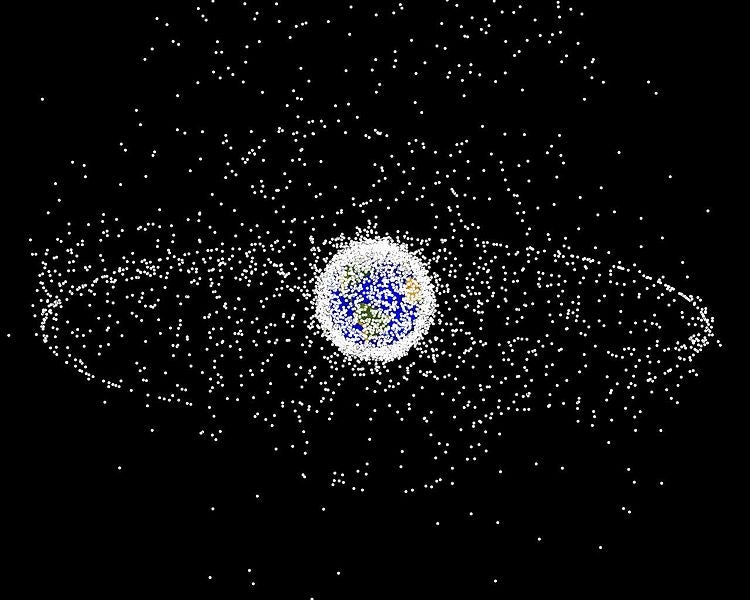
We talk about how scientists and the general public could benefit from greater science literacy. Then, we talk about how to reduce the amount of space debris falling to Earth. Then, we ask for listeners to call in with their suggestions for future topics and guests.
Featured in this Episode
The state of science education
Why space debris is falling rather than burning up in Earth’s atmosphere
Listener suggestions
Episode Credits
- Larry Meiller Host
- Bassam Shakhashiri Guest
- Matthew Ray Guest
- Jill Nadeau Executive Producer
- Joel Patenaude Producer
- Lee Rayburn Technical Director
A science literacy advocate; and making falling space debris less dangerous; listener suggestions
Wisconsin Public Radio, © Copyright 2026, Board of Regents of the University of Wisconsin System and Wisconsin Educational Communications Board.


Why space debris is falling rather than burning up in Earth’s atmosphere
Transcript (auto-generated)
0:08: Thanks for joining us here on WPR News.
0:11: Larry Miller here.
0:12: We’re gonna turn our attention to the large pieces of jettison rockets and maybe some defunct satellites.
0:21: some of them have crash landed on Earth, and we’ve got a lot more space junk out there than we used to have, and there’s some danger associated with it.
0:30: That’s why, we’ve asked Matthew Ray, Professor Matthew Ray.
0:36: to join us today.
0:37: He’s chair of the physics and chemistry department at UW-Stout, and they’re doing some really interesting things relating to, safety and, and space degree, and we’ll find out all about it as we talk with him and I hope you’ll join in.
0:57: What questions do you have about cleaning up our skies?
0:59: Give us a call.
1:00: The number is 800-642-1234, or you can send an email to talk@wpr.org.
1:11: Matthew Ray, welcome.
1:12: Thanks for joining us today.
1:13: Appreciate it very much.
1:15: Yes, thank you, Larry.
1:17: Thank you so much for the invitation and for the opportunity to be here on the show.
1:20: You study space debris and.
1:24: It, it comes from, the debris comes from a variety of sources, I believe.
1:31: Yes, definitely.
1:32: So when you think about all these rocket launches that are occurring, sometimes the lower stages, they fall back in the ocean or come back and get caught or land, but the upper stages, as well as the payloads, well, they go into orbit.
1:43: Those are out there for weeks to months to years to even decades in some cases.
1:49: And so there’s some legacy material that’s been up there for 50 or 60 years at this point.
1:54: Well, if we look back, 50 or 60 years and compare it to today in terms of the number of launches that are going on, it’s gotta be much, much larger today than it was, say, in 1950 or whatever.
2:11: Yes, absolutely.
2:12: Things are progressing at a breakneck pace and so thanks to a lot of the private providers such as SpaceX, Rocket Labs, Blue Origin, things are happening now in the thousands.
2:25: Like last year we had 4500 launches.
2:28: Worldwide, where that number used to be in only the hundreds for many decades.
2:33: And so we are looking at an exponential rise in the number of things that are being launched, the number of payloads to space, and so with that comes a lot of changes, I think that we’re going to have to adjust to.
2:44: Yeah, well, if I’m not mistaken, about 80% of active satellites.
2:52: At least in low Earth orbit, are operated by Starlink, which is Elon Musk’s company.
3:00: Yeah, that’s correct.
3:02: And there, there are people who are on Starlink seem to love it, especially if they’re in an area where they wouldn’t be able to get, get the signals otherwise.
3:16: But are these satellites failing to any degree, do you know?
3:21: So, in general, Starlink does a pretty good job of designing their satellites that they do burn up on reentry.
3:29: There are some cases where there’s a non-nominal launch or in some cases because of solar flares, the solar wind sometimes fluffs up the atmosphere, kind of like fluffing up your Hair with a hair dryer and makes it a little bit more puffier.
3:43: And so, as a result, those satellites encounter atmosphere earlier than the calculations would have otherwise suggested.
3:50: And so in those cases, there have been some off nominal Starlink satellites that have come back prematurely.
3:57: I know that there was a chunk of aluminum.
4:00: It fell in Canada within the last couple of years because of Starlink, but overall, whenever things are going to plan, they’re often coming back and going into the Pacific, which is a favorite spot to put these things that come out of orbit.
4:15: You just put them in the largest center of the ocean there here on Earth.
4:20: So overall, it’s, it’s being managed, but, the concerning part is that the current constellation is just several 1000 but there’s now licenses to get up to 10s, hundreds of thousands, or even the latest request is get up to a million satellites in that Starlink constellation.
4:39: So, when you start looking at statistics, when you’ve got that many things up there, when things go wrong, it just increases the chance that they may land where we don’t anticipate them.
4:50: Man.
4:51: So is there, I mean, what happens when they, I mean, what happens to the debris that falls?
4:58: And, it doesn’t, it doesn’t burn up.
5:02: Right.
5:02: So, I mean, it just comes in hot, figuratively and literally.
5:06: It’s a, a heated piece of, of debris and it just falls until it impacts Earth or the ocean.
5:13: And so, you know, there’s kind of a misconception out there that space is hot and it’s, it’s hot up there as it goes to the atmosphere.
5:20: It’s not the space that’s hot, it’s the fact that these materials are moving so fast.
5:25: And so to achieve low Earth orbit, it’s traveling at 17,000.
5:30: Miles an hour.
5:31: And so when you think about all that energy that you see, the fire shooting out of the rocket, all that energy necessary to accelerate that payload, well, all that energy doesn’t go anywhere, it stays there in the velocity of the rocket.
5:45: And so, and the velocity of that payload, the satellites, and so all that energy has to go somewhere.
5:50: So when that goes back into the atmosphere, it’s the compression.
5:54: That causes that, that atmosphere to heat and then heat that that object, that, that spacecraft or satellite.
6:01: And so, As a result of that breaking, heating, you end up usually with the material melting or decomposing or ablating away.
6:12: So when these things come back in, they are partially charred, partially consumed, and if the engineering is right, it’s completely consumed.
6:21: but in some cases, there’s an unintentional heat shield effect, especially with these composite materials that is causing things to survive at a higher rate than was originally anticipated.
6:34: Yeah, and those composite materials, they’re, I’ve got a bike that’s, you know, a composite bike.
6:40: It’s pretty light.
6:43: Yeah, absolutely, and it’s far different from the earlier satellites that didn’t have that material.
6:51: Right, so, A priority of launch providers and people who are trying to put things in space is that cost per kilogram to get things into space.
7:02: Now, SpaceX has been disruptive because of the inexpensive nature of their reusability.
7:07: The cost per kilogram to space has gone down 10-fold, 100-fold as we’re now moving into the Starship era.
7:16: And so that’s quite disruptive, but it was always all about saving weight and so where you can Take a metallic object and replace it for a composite, especially a composite that’s stronger, you’re able to get additional satellites into space for the same cost of launch.
7:32: And so that was a real game changer.
7:34: And so trying to get to lighter weight in order to get more spacecraft, more satellite to orbit has been a major theme in the past several decades.
7:45: Yeah, Sandy in Madison has something for us.
7:47: Let’s go there.
7:48: Hi, Sandy.
7:50: Hi there.
7:50: I just wanted to share a memory about satellites going over us.
7:54: I’m in my 70s and when I was a little tiny kid, we would spend a little time at a lake and my dad would know somehow that a satellite was scheduled to go over our area.
8:07: At night, and he, that would be a special, we could go out on the beach late at night, get all bundled up, and we’d all watch to see this little tiny light go over us, and it was very exciting and it just makes me think how much things have changed since that time.
8:24: So I just wanted to share that thought.
8:25: Yeah, Sandy, thanks.
8:27: You, you brought to mind, my, I have the same experience, Sandy, all those years ago.
8:33: Getting outside on a dark night and watching those, that one satellite go overhead.
8:41: Right, yeah, it’s amazing how things have changed.
8:43: You don’t have to do more than just wait for about 30 seconds before your eyes defocus or focus in and you can see, oh, there’s something moving north to south.
8:51: That’s a polar orbit.
8:52: There’s something moving east to west.
8:54: That’s definitely another.
8:55: So, it’s, it’s no longer difficult to see a satellite.
8:58: And of course, there’s websites that you can find that tell you when the International Space Station.
9:02: Flying over and there’s also the specter of these satellite trains because of the way Starlink launches 30 to 50 satellites at the same time, they come out as a train and as they spread out in space, it makes this very conspicuous sequence of lights, especially dusk at dusk and dawn, where you can see those flying overhead.
9:21: So yeah, it’s it’s an amazing time.
9:23: to be able to witness those things.
9:25: Yeah, thanks, Sandy, for that remembrance because it brought back my own memories.
9:31: Who’s, if there’s damage done.
9:36: something lands on my house, who’s responsible for the damage?
9:43: Yeah, that’s a really great question.
9:44: And so it really also highlights how things have changed.
9:48: This goes all the way back to a 1972 piece of legislation or, really a treaty amongst the spacefaring nations that’s called the Space Liability Convention in 1972.
10:01: And so that puts the onus on the government that approves the launch.
10:06: And so the government that approves the launch is responsible for any damages that are done when that material comes back and hits the ground.
10:14: Now that made sense during a time when it was only nations that were launching things, of course, the NASA, as well as the Russian space agency Roscosmos.
10:27: So, they would be on the hook for any damages if something came back and and hit.
10:32: However, we’re now moving into this new age of private space companies and so people are wrestling right now with what to do with that liability, as well as risk, and so it still goes back to the FCC when they approved.
10:50: and the FAA when they approve those launches, they then are also taking on the responsibility if something were to go sideways.
11:00: but there’s currently, scrutiny right now looking at that space liability convention to figure out what should the next round look like.
11:10: Really interesting.
11:11: And, and you run a materials research group at, Stout, UW Stout.
11:22: Talk about what that group does.
11:25: Right.
11:25: So, I certainly want to give a shout out to my, research assistant, really, at this point, more accurately described as my research colleague.
11:33: She’s also co-author, founder and entrepreneur, Reese Hufnagel.
11:38: so, it’s really been a, a collaborative effort on our part to dig into this space debris issue and try to find ways to diminish risk, how to make materials smarter so that they They are strong when they need to be when they’re on mission and orbiting, but they fall apart more easily once they experience that elevated heat of reentry.
12:00: She would have loved to have been here, but she’s currently at NASA Goddard Space Flight Center working there this summer there in Maryland, and so she wasn’t able to make it today.
12:09: Wow.
12:09: So, I, you know, as I, as I looked at that, I thought, well, how do you make something, I mean, when you’re going up, It’s gotta be, it’s gotta be strong.
12:21: And when you’re going, when it’s coming back, then it suddenly has to be not so strong.
12:28: Yeah, it’s a real challenge and one that needs to be addressed.
12:33: And so there’s a concept in material science for space called design for demise.
12:38: And so it’s not new.
12:40: There’s been initiatives like this for the past 20 or even 30 years.
12:45: And so of course the Space Debris Office at NASA, as well as the European Space Agency prioritizes.
12:53: These efforts and tries to find ways to make the materials safer.
12:57: So, you know, our part of that is looking at carbon fiber because carbon fiber is often used for heat shields in intentionally making materials that will sustain the temperatures of reentry.
13:10: But in the case of just using composites, the problem with this material is that it’s manufactured at 3000 °C.
13:17: Or up to 5000 °F, and so it’s manufactured at such high temperatures when you’re making that filament turn into graphite that it is remarkably thermally stable.
13:30: So it’s sort of properties that are along for the ride that you want that exceptional strength as well as low weight, but with that comes that really incredible high temperature stability.
13:41: So, The way to address this is that you have to know the temperature profile.
13:47: So when something is going to launch, as long as it’s not down in that engine compartment area, it doesn’t see temperatures that go above typically 100 to 200 °C.
13:58: And so that’s around the temperature that you would experience in just a regular cooking oven.
14:02: And so at those temperatures on the ride uphill, that’s a bit easier to plan for because the carbon fiber is an epoxy matrix.
14:13: Think about epoxy glue.
14:14: That material is quite similar to what some of those composite materials are embedded.
14:20: So it’s a really high temperature stability fiber in that polymer plastic matrix that makes up a lot of those materials.
14:28: And so it’s, it’s really looking at the chemistry of those composites and the carbon fiber itself and trying to find a way to make that easier to burn up and oxidize once it gets above several 100 degrees.
14:49: Well, you know, I, I wanna back, back it up a little bit and talk about your program, which I think is just a a great program that you’ve got going there, and you’re, you’re kind of co-researcher, you can almost call her now, I, I saw an interview or a comment from her that she actually got started on this when she started as a freshman at Stout
15:19: Yes, that’s, that’s correct.
15:21: she’s got an incredible work ethic.
15:23: She, came to Stout with, enough credits and already had an associate’s degree as she started as a freshman.
15:29: so she joined as a chemistry major, and, it was apparent that she was up to the challenge of doing some, research.
15:39: Her, love is material science and space, and so this project is really a perfect fit because It’s just that, it’s both of those things combined into one.
15:49: So, it was really that interest and work ethic that she brought to the table that has caused this past two years of research to be so remarkable in terms of what we’ve been able to discover and accomplish.
16:02: So she’s got her own business started.
16:06: Right, right.
16:06: So, last summer, we had some early, successes, in terms of, some chemistry identified that to, to address this.
16:16: And so we, we took our, material through the NSF I-Corps program out of UW-Madison, our, our mentor Bonnie Bachman, oversees that, project.
16:28: And so what this does, it’s a, it’s a 6 to 10 week program that gets you out of the building and interviewing potential future customers, through these future customer interviews.
16:40: And so, We interviewed 50 to 60 different entities, attended different conferences, and even air shows, believe it or not.
16:49: There’s a great place to get in front of aerospace companies there, just trying to get a feel for the need and where the priorities are.
16:57: In these companies.
16:58: And so, after that summer, it was apparent that there was some commercializability here and so, yeah, we, we started a company, Aurora Catalytic to try to to get some visibility and to push, push these efforts forward for design for demise.
17:14: it’s, it’s really pretty cool.
17:16: And you, and your lab has, just to get off the topic a little bit, your lab is doing other things as well.
17:24: That relate to science for sure.
17:28: Yes, of course.
17:29: And so for the past 10 years I’ve been doing work and research with science and even engineering students on areas of plastics, polymers, composite research is really a more recent.
17:41: , thing.
17:43: We’ve also done a lot of glass research and so I, I kind of I’m a generalist in terms of material science that there’s lots of projects from low melt point metals to fluorescent glass and emulsion polymerization projects.
18:00: so yes, this composite work is really a more recent development in the past couple of years.
18:05: So there and back to the debris for a minute, there is a, what is it called, a zero debris charter, is there not?
18:15: That’s kind of an international thing.
18:19: Yes, the Zero Debris Charter is really an initiative of the European Space Agency, ESA as they call themselves, where they are trying to get companies to sign on and pledge that they will use the tenants of the zero debris charter in the design of their spacecraft so that they are more sustainable, and this has to do with the materials that are used as well as the orbits that they are placed in to make sure that they are safe.
18:48: There’s a few different issues and so one of the concerns is things in orbit being damaged to other things in orbit.
18:56: And so there’s all these maneuvers that have to happen to make sure that satellites don’t collide and really almost secondarily, the concern is what happens when these things reenter the atmosphere.
19:06: The assumption is that they burn up and fortunately the Earth is 75% water and of that 25% that remains on land, only 2%.
19:15: Of that land is urbanized and so most of the earth is water or wilderness or agricultural areas and so, you know, so far we have dodged the bullet, if you say, at least from what is known that whatever is reentering has been hitting somewhat unpopulated areas.
19:33: But yes, that zero degrees charter is certainly a new legislation.
19:39: There’s also, it’s not signed into law yet, but the US Orbits Act.
19:44: it was tried in the past couple of legislative cycles in 2023 and now 2025.
19:50: That’s when, that one’s headed up by Senator Hickenlooper from Colorado.
19:55: but there are initiatives looking at orbit orbit safety as well as orbit to ground safety, and these pieces of legislation and efforts are certainly central at that worldwide.
20:07: And that has, I guess that has an impact on, on your work in many ways.
20:13: Certainly.
20:13: So it definitely drives impetus on the need to find solutions designed for demise solutions to make space safer.
20:23: And so it’s the backdrop of the legislation, the changing liability, as well as the exponential rise in the things that are being put into space with a plan that’s only going to go up by 10s of thousands, 100s of thousands in the next decade.
20:38: It’s going to be, like I said, amazing, an amazing time.
20:42: And so, you know, I sort of have a cautionary posture on this.
20:45: I admire, SpaceX and I’m certainly not trying to stand in the way of, of progress.
20:50: You mentioned Starlink.
20:51: I, we vacation sometimes up in the, the UP, up in the Upper Peninsula of Michigan.
20:57: And so, Starlink is, really one of the only games in town up there if you want to get internet connectivity at any good, rate.
21:05: And so, it’s a game changer for, remote parts of the, the earth as well as even Out in the ocean.
21:12: I mean, it’s, it’s amazing how it’s worldwide now.
21:14: And so, but we have to do this in a way that doesn’t cause unnecessary risk or unknown risk to those that are here, here on, on Earth, essentially.
21:25: it’s been described as an unnatural disaster, because, you know, when you get in a car or get in a plane, you’re aware that you’re taking on risk.
21:35: but when you are just going about your day, you’re not aware of the fact there’s risk.
21:40: Because of falling debris that right now is very low risk statistically, but what are we gonna do when we come into a time in the next decade or two when it’s not statistically, unlikely.
21:54: It’s, it’s, there’s gonna be things falling.
21:56: From the sky, how are we going to deal with that?
21:57: And so, it’s the fact that you aren’t necessarily a part of assuming that risk, that’s a concern to me, that means we have to have a higher standard of, of launching things into space to make sure that risk is absolutely kept at a minimum.
22:11: Yeah, well, you’re doing some amazing work.
22:13: I mean, how’s the company, I mean, you’re started, the company, your company has really started and research is ongoing, I expect.
22:22: Yes, it is, it is started.
22:23: We are currently looking for partners, looking for collaborators to to get these things commercialized and tested.
22:32: And so we’ve done a lot of work with the Wisconsin Space Grant Consortium.
22:36: They have been truly Inspirational.
22:39: Christine Bolz and Kevin Crosby there have been very, supportive of, of both Reese’s research, and, and really pushing these things, forward.
22:49: We’re also, collaborating with Kivi Bio out of Kenosha, and so we have been in discussions with, with them, Todd, Todd Kapp.
22:58: And so, but certainly interested in, in, in finding new ways, to, partner on these issues.
23:07: Well, I’m hoping that Lee Rayburn will have a chance to talk with you down the road.
23:13: I think he’s nodding his head right now.
23:14: I can see him.
23:15: He, he’s interested to know how things progress, and Matthew, it’s been a real pleasure talking with you today.
23:23: Thank you so much for being with us and we’ll look forward to another visit down the road.
23:28: Yes, thank you so much, Larry, for the opportunity to be here on your show today.
23:32: Matthew Ray is a professor and chair of the physics and chemistry department at UW-Stout.
23:41: Not sure we’ve ever had back to back chemistry professors on the show, but they both did a really good job.
23:48: And speaking of, well, speaking of the show, we’re always looking for new topics or other topics or things that you’re interested in, and we’re gonna be talking and getting your suggestions.
24:04: So if you got some program ideas, get your finger ready to punch in, into your phone and give us a call and let us know or email us.
24:14: I’m Larry Meiller for WPR News.
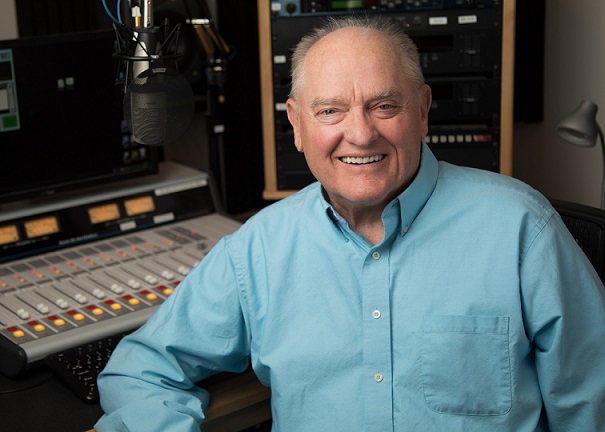
Larry Meiller Announces Retirement After 58 Years on WPR
Dec. 2, 2025 7p
(WPR)—A fixture of Wisconsin radio for nearly six decades, Larry Meiller has announced that he will retire from his Wisconsin Public Radio (WPR) program at the end of June 2026. Meiller has been a daily presence on WPR since 1967 and his call-in talk show is among the most listened-to programs on the statewide radio network.
Featuring a mix of Wisconsin-focused subjects and guests, Meiller has welcomed listeners to join in on conversations about the environment, consumer issues, nature, books, gardening, home improvement and more each weekday since creating WPR’s call-centered show format with “The Larry Meiller Show” in 1978.
In addition to his remarkable radio career, Meiller was a professor emeritus in the Department of Life Sciences Communication at the University of Wisconsin-Madison. He retired from his 102-semester teaching career in higher education in 2022.
“As Larry retires, we are so honored to celebrate one of the greatest careers in public radio,” WPR Director Sarah Ashworth said. “It has been a personal pleasure to get to work alongside Larry and listen to the care he has brought to fostering valuable relationships with our listeners across Wisconsin. Larry’s legacy has shaped how WPR interacts with our listeners, and how we strive to include voices from across the state.”
In addition to many accolades he received for his work in radio and higher education, Meiller was inducted into the Wisconsin Broadcasters Association in 2017.
As he made his announcement on Monday afternoon’s show, Larry reflected on his career. “It’s something I’ve been thinking of a long time,” Meiller said. “There are a lot of reasons for it. I have a daughter getting married in July. I have three great daughters and I haven’t had enough time to spend with them. I want to do a little running around with them.”
“We went from a 30-minute farm show almost 60 years ago and took it to a 60-minute show I co-hosted with a few people. In 1978, WPR Director Jack Mitchell came to me and said he was thinking of putting together a call-in talk show. I thought about it for a bit and I said I want to keep an Extension-aspect to it, and have fun with it. I want to do shows that are useful to people in their daily life – health shows, garden shows, environment and outdoor shows — everyday kind of shows that touch on topics we’re all interested in here in Wisconsin.”
“So I got started in 1978 with an hour call-in show. Then we went to 90 minutes. Then two hours. I’m not going any higher,” Meiller laughed. “I wondered how many shows I’ve done in 59 years. You do the math and I believe I’ve hosted more than 13,670 shows over my time with somewhere-in-the-neighborhood of 27,000 topics, 30-35,000 guest experts and about 350,000 calls and emails since I started.
“The guests, the callers and the emailers are the stars of this show,” Meiller added. “I’ve had a lot of fun with it, and it’s been a real treat for a long, long time.”
Ahead of Meiller’s retirement on June 30, 2026, WPR will celebrate his extraordinary career with a series of events across Wisconsin, including live broadcasts at PBS Wisconsin’s Garden and Green Living Expo in February and the annual Bayfield in Bloom event in May. Full details will be shared for these and other events at wpr.org.
Meiller’s legacy will continue to inspire these same kinds of conversations as his mid-day show’s timeslot will be replaced by another WPR-produced show that shares his commitment to practical advice and engaging conversations.
“The Larry Meiller Show” airs weekdays 11 a.m.-1 p.m. on the WPR News network across Wisconsin and streaming online at wpr.org and on the WPR app. Daily show archives can be heard online at wpr.org/shows/larry-meiller-show.
https://www.wgtd.org/news/larry-meiller-announces-retirement-after-58-years-wpr